
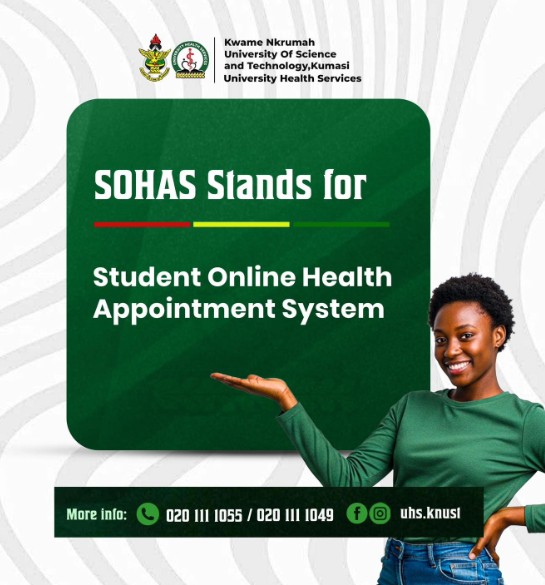
A new study by researchers at the University Health Services at the Kwame Nkrumah University of Science and Technology (KNUST) has found strong positive student support for a digital healthcare appointment system designed to reduce waiting times and improve access to care.
The study, published in the journal Implementation Science Communications, examined the Students' Online Health Appointment System (SOHAS), a digital booking platform developed by the KNUST Hospital to streamline healthcare delivery at the university's Students' Clinic.
Researchers assessed how students perceived the online appointment system and whether the evaluation tools used to measure its effectiveness were reliable and suitable within the Ghanaian university context.
The Hospital introduced SOHAS as part of efforts to improve efficiency in healthcare delivery for students. The mobile application allows students to schedule appointments before visiting the clinic, helping to reduce congestion and long waiting periods.
The study, led by Douglas Anning Opoku, involved 511 KNUST students who evaluated the system using a 15-item questionnaire measuring acceptability, appropriateness, and feasibility.
Findings from the study showed excellent internal consistency and strong convergent validity across all assessment measures, reinforcing confidence in the system's effectiveness and the reliability of the evaluation framework.
Researchers noted that the digital platform aligns with the needs of university students, many of whom are already familiar with technology-driven services.
The study also highlighted the growing role of implementation science and digital health innovations in strengthening primary healthcare systems and advancing universal health coverage.
According to the researchers, digital tools such as SOHAS can improve healthcare accessibility, reduce delays, and support better coordination of care in low-resource settings.
The team recommended further studies involving broader populations to support the wider adoption of digital health systems in Ghana and similar environments.
The researchers concluded that the validated assessment measures provide a useful framework for evaluating digital health interventions in low-resource settings and could guide future healthcare innovations within and beyond university health systems.
The research team also included Eric Kojo Nsa Oduro, Julius Kwabena Karikari, Emmanuel Konadu, Mercy Addae, Elizabeth Oppong-Kyekyeku, Francis Akabo, Brenda Abena Ampah, Godknows Mensah Kunkpe, Irene Ohene Manu, Nana Akua Abruquah, Phanuel Seli Kwadzo Asense, and Nana Kwame Ayisi-Boateng.


