
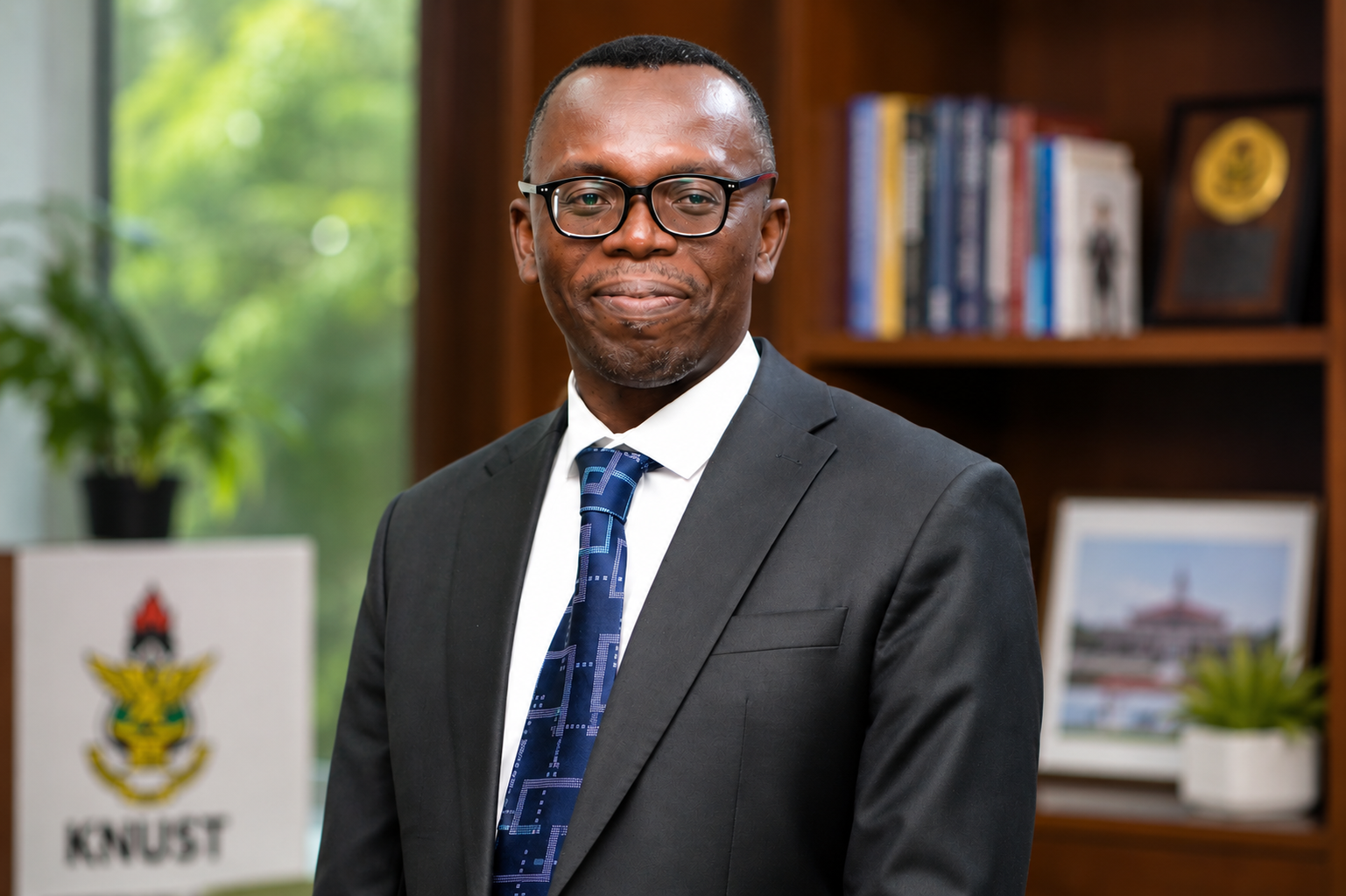
The Kwame Nkrumah University of Science and Technology, Kumasi (KNUST) has appointed Professor Fred Stephen Sarfo, one of Ghana's leading neurologists and stroke researchers, as Provost of the College of Health Sciences for a three-year term from August 1, 2026, to July 31, 2029. The appointment was approved by the University Council at its 293rd Regular Meeting held on June 18, 2026. Prior to his appointment, he served as Vice-Dean of the School of Medical Sciences.
Professor Sarfo brings to the position more than two decades of experience in clinical medicine, medical education, research and healthcare leadership. A product of KNUST, he obtained a Bachelor of Medicine and Bachelor of Surgery degree in 2003 after completing a degree in Human Biology in 2000.
He subsequently trained as a physician through the West African College of Physicians, becoming a Member in 2008 and a Fellow in 2012. He later earned two doctoral degrees, a PhD from Durham University in the United Kingdom in 2013 and a second PhD from KNUST in 2014.
Currently a Professor in the Department of Medicine at KNUST and a Senior Physician Specialist at the Komfo Anokye Teaching Hospital (KATH), Professor Sarfo has built an international reputation for his work in neurology, stroke prevention and non-communicable diseases.
Since establishing the Neurology Clinic at KATH in 2011, he has played a pivotal role in improving neurological care for patients across the middle and northern sectors of Ghana.
His research career spans infectious diseases, HIV medicine, cardiovascular diseases and neurological disorders. However, he is best known for his pioneering work on stroke, a disease that remains one of the leading causes of death and disability in Ghana and across Africa.
Through extensive collaborations with researchers across Africa, Europe and North America, he has contributed significantly to understanding the causes, prevention and treatment of stroke among African populations.
Professor Sarfo has authored and co-authored hundreds of peer-reviewed scientific publications in leading international journals, including Stroke, Neurology, Lancet Global Health, Brain, Nature Reviews Neurology, Journal of Neurological Sciences and International Journal of Stroke. His work has explored stroke risk factors, hypertension, Parkinson's disease, tele-neurology, post-stroke rehabilitation, cardiovascular health, HIV-related complications and innovative digital health interventions.
Among his most notable contributions is his involvement in the Stroke Investigative Research and Educational Network (SIREN), one of Africa's largest stroke research collaborations.
The initiative has generated critical evidence on stroke risk factors among Africans and helped shape international understanding of cerebrovascular diseases in populations of African ancestry.
Professor Sarfo has also championed the use of technology to improve healthcare delivery. His work on mobile health and telemedicine interventions for stroke survivors has demonstrated the potential of digital innovations to enhance long-term patient care in resource-constrained settings.
Through projects such as the Phone-Based Intervention under Nurse Guidance after Stroke (PINGS) Study, he has contributed to developing practical solutions for improving blood pressure control and stroke outcomes among patients in Africa.
His achievements have earned him several prestigious honours, including the Ghana Medical Association's Best Doctor Award in the Specialist Category in 2010, the Best Lecturer in Medicine Award in 2015, the Bruce Schonberg Award for International Neuroepidemiology from the American Academy of Neurology in 2018, and the KNUST Best Senior Member Award for Research and Scholarship in 2018. He also served as a Commissioner for Ghana's Stroke Prevention Initiative under the WHO-Lancet Commission.
Beyond research and clinical practice, Professor Sarfo has mentored numerous medical students, residents and early-career researchers, helping to build capacity in neurology and clinical research across Ghana. Colleagues describe him as a physician-scientist whose work seamlessly combines patient care, teaching and research for public benefit.


