
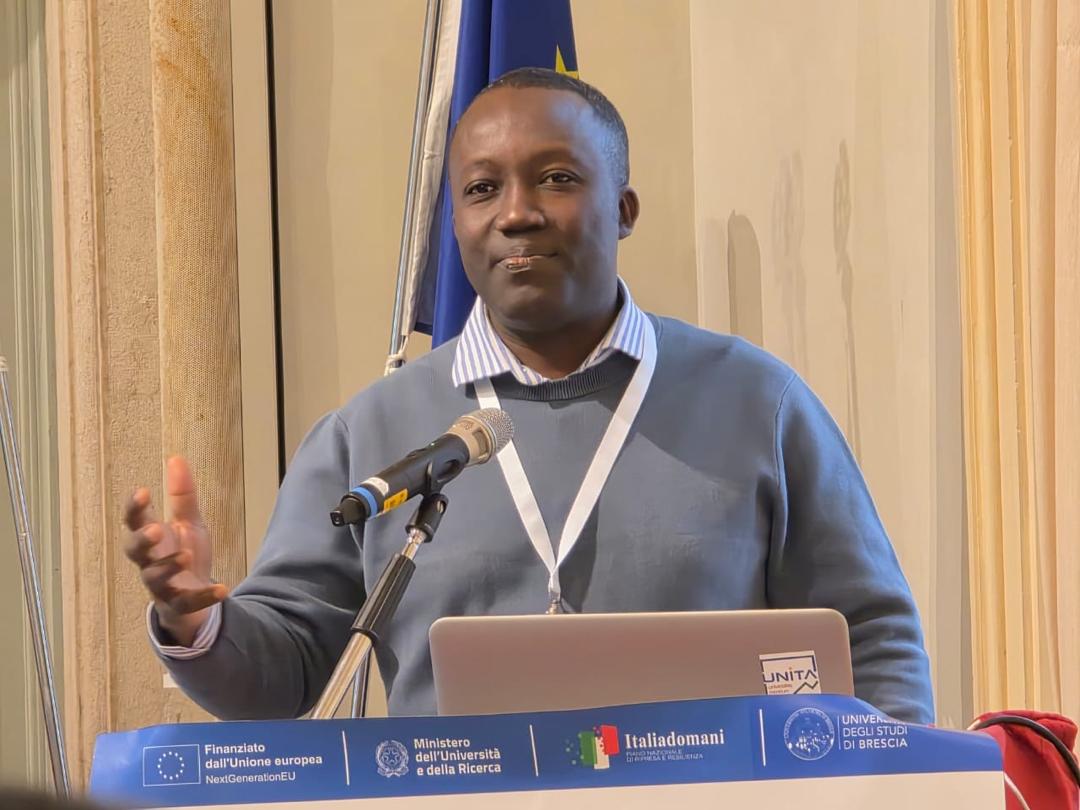
An Associate Professor of Sustainable and Inclusive Architecture and Head of the Department of Architecture at the Kwame Nkrumah University of Science and Technology (KNUST), Prof. Daniel Y. A. Duah, has called for transnational education (TNE) partnerships that prioritise inclusive and mutual learning, contextual adaptation, and long-term capacity building to advance the goals of Africa’s Agenda 2063.
Prof. Duah made the call at the ongoing UNITAFRICA International Winter Advanced Skills Course at the University of Brescia, Italy, held from December 15–19, 2025, under the theme “Innovating Higher Education: Strengthening Africa–Italy Collaboration through Joint Pathways for SDGs 2030 and Agenda 2063.”
On December 16, Prof. Duah jointly delivered a presentation with Prof. Alberto Arenghi of the University of Brescia (UNIBS) on “Social Inclusion and Disability: Innovative Technological Education for Persons with Disability,” highlighting the role of inclusive pedagogies and assistive technologies in higher education.
In an earlier session on “Higher Education in the African Union’s Agenda 2063: Strategic Vision for African Continental Development,” co-presented with Prof. Sossé Ndiaye of Université Cheikh Anta Diop de Dakar, Senegal, Prof. Duah said that while Agenda 2063 provides a clear vision for sustainable and inclusive development, its success depends on the active understanding and participation of governments, the private sector, and civil society.
Speaking on the opening day of the winter school on December 15 on “Challenges of African Higher Education and the Role of TNE Programmes,” Prof. Duah said higher education is central to Africa’s demographic transition and innovation agenda, describing partnerships as a key driver and transnational education as a necessity.
He is expected to share KNUST’s experiences in transnational education on the final day of the programme.


