
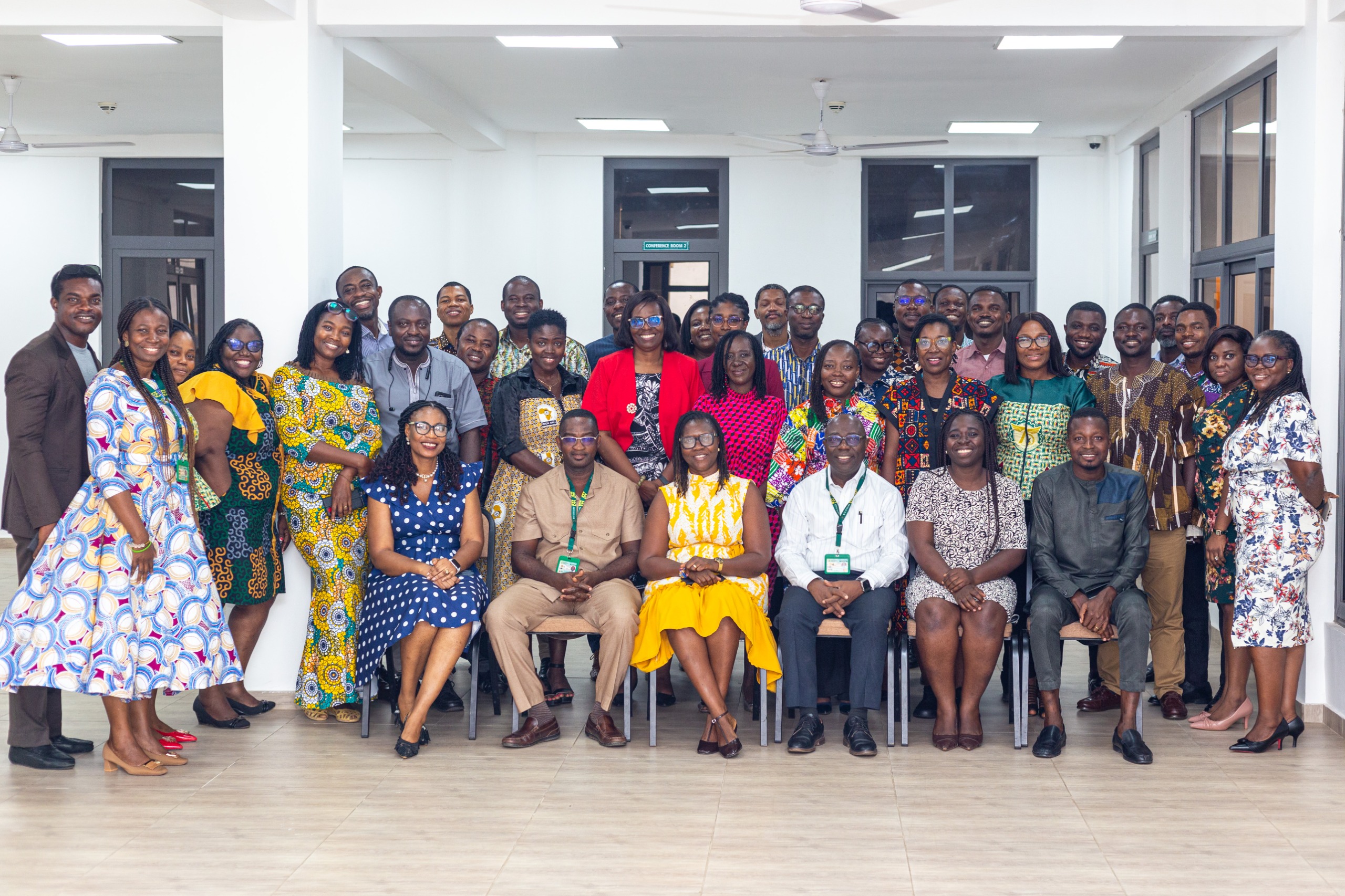
The Kwame Nkrumah University of Science and Technology, Kumasi (KNUST) has trained teaching staff to strengthen safeguarding systems across the university and promote a safer learning and working environment.
The workshop, organised by the Gender, Inclusion and Vulnerability (GIV) Office in collaboration with the Quality Assurance and Planning Office (QAPO), brought together teaching staff from the university's six colleges and the Obuasi Campus.
Held at the KNUST Library Mall Conference Room, the workshop was themed "Strengthening Institutional Safeguarding Systems at KNUST."
The Head of the GIV Office, Professor Mercy Badu, said safeguarding should protect everyone who studies, works or conducts business at the university.
"The University believes all individuals have a right to learn, work and develop within a safe environment," she said.
Prof. Badu said KNUST was committed to protecting students, staff, researchers, visitors and other members of the university community from harm.
She said safeguarding challenges in higher education were evolving and required greater awareness, accountability and effective reporting systems.
According to her, the training was designed to help staff understand their safeguarding responsibilities and develop practical measures suited to the KNUST environment.
The workshop covered safeguarding in teaching, research, laboratories, online learning and student accommodation. Participants also examined case studies and discussed practical safeguarding scenarios relevant to the university.
The Dean of QAPO, Professor Daniel Adjei-Boateng, delivered a presentation on the state of safeguarding at KNUST, while Professor Daniel Ansong led sessions on institutional safeguarding in higher education and facilitated group case-study discussions.
Prof. Badu thanked QAPO and the University Management for supporting the workshop and acknowledged Prof. Ansong for his contribution to its organisation and delivery.
Participants were drawn from the Colleges of Health Sciences, Agriculture and Natural Resources, Art and Built Environment, Science, Engineering, and Humanities and Social Sciences, as well as the Obuasi Campus. Representatives from the QAPO-GIV team, the NEPS Project and other partner organisations also attended.
The training is expected to support the establishment of departmental safeguarding focal persons, the development of clearer safeguarding guidelines, the public display of safeguarding protocols, and confidential reporting and referral mechanisms.
Prof. Badu urged participants to apply the knowledge gained during the workshop to strengthen safeguarding practices across the university.
"We actively participate, engage in the discussions and practical exercises," she said, encouraging participants to reflect on how safeguarding could be strengthened across KNUST.


