
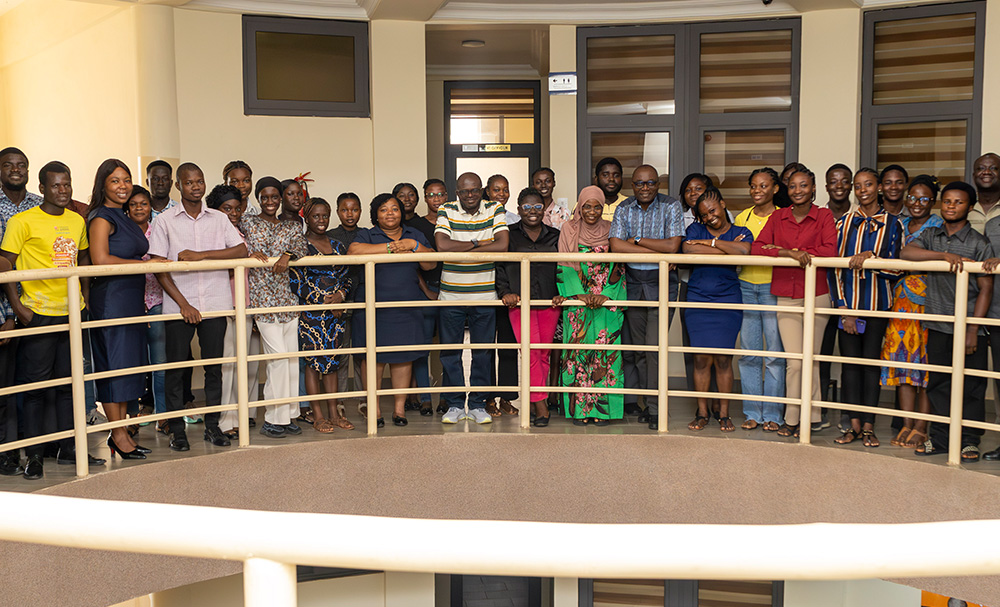
The Kwame Nkrumah University of Science and Technology, Kumasi (KNUST), through its Nutrition and Sustainable Agrifood Collaborative (Nkabom Collaborative), in partnership with the Mastercard Foundation, has commenced the Blended Tertiary Entrepreneurship Training (TET) for university students, marking a significant step towards building youth capacity in agribusiness.
The 10-day training programme, which brought together 40 students from across the University, is designed to expose participants to diverse opportunities within the agrifood sector beyond primary production. It forms part of ongoing efforts to address youth unemployment and underemployment through practical, innovation-driven entrepreneurship.

Speaking at the opening session, Entrepreneurship Pillar Lead, Prof. Wilberforce Owusu-Ansah, underscored the practical orientation of the programme. He noted that the training departs from conventional classroom teaching.
He challenged participants to embrace a new mindset and rethink traditional approaches to learning and business development.
“We are going to challenge you to be more creative, think boldly, and act in an innovative way to come up with ideas that can transform the agrifood system, your community, and our country,” he said.
Prof. Owusu-Ansah also highlighted the programme’s strong support system, including access to funding and mentorship for viable business ideas.
“We are here to support you… including funding of up to $15,000 for ideas that prove worthwhile, alongside several wraparound services,” he noted.
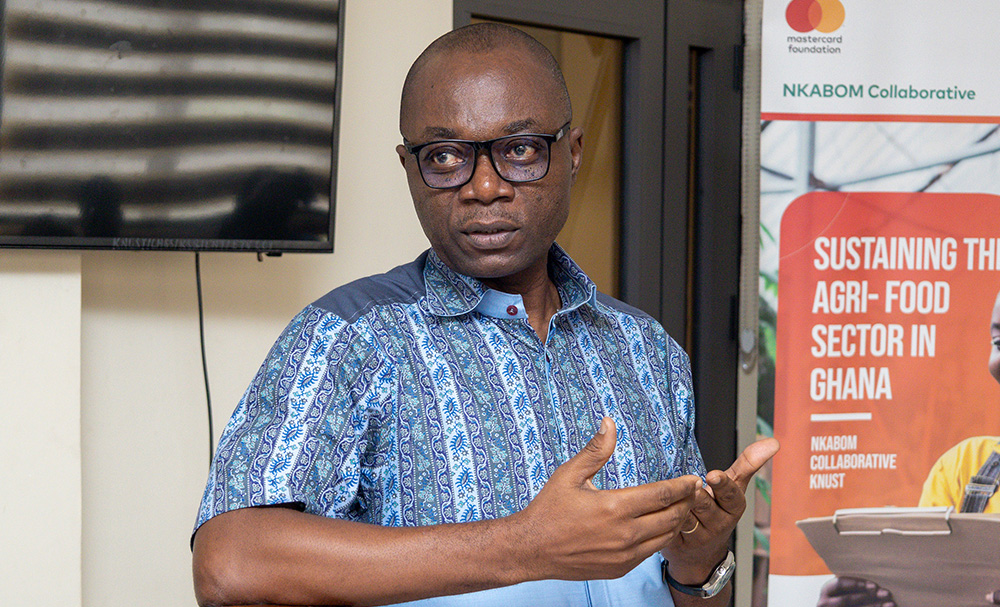
Lead Facilitator, Dr Isaac Tweneboah-Koduah, outlined the structure of the training, which is built around four key models aimed at equipping participants with both entrepreneurial and intrapreneurial skills.
He explained that participants would be guided along two key pathways, starting their own agribusiness ventures or creating value within existing organisations.
“If you are working for someone and improving efficiency, we call you an intrapreneur. We want you to develop that mindset, not just wait for salary, but create impact,” he stated.
Dr Tweneboah-Koduah emphasised that the ultimate goal is to enable students to build sustainable businesses that contribute to national development.
“Agribusiness is the future and we want you to create the jobs you are looking for and make the world a better place,” he said.


