
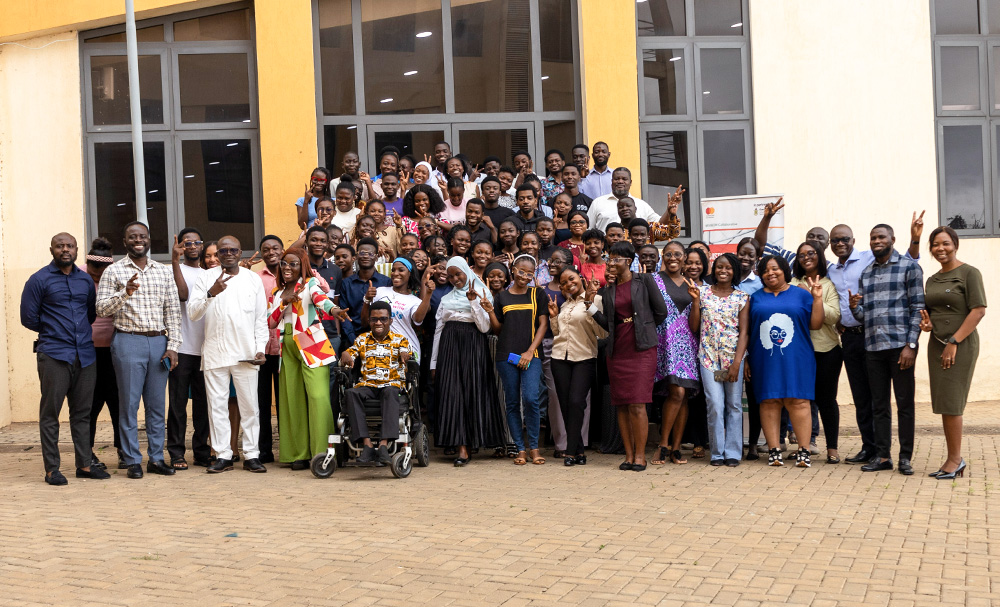
The Kwame Nkrumah University of Science and Technology, Kumasi (KNUST), Nutrition and Sustainable Agri-food Collaborative, in partnership with the Mastercard Foundation under the Nkabom Collaborative, has begun the second cohort of the second year of its Tertiary Entrepreneurship Training (TET) in Agribusiness.
The 10-day training, organised under the project's Entrepreneurship Pillar, targets 100 tertiary students and seeks to equip them with the entrepreneurial knowledge and practical skills needed to identify and develop business opportunities across the agricultural value chain.
The programme encourages participants to look beyond traditional farming and view agriculture as a broad entrepreneurial ecosystem, with opportunities spanning production, processing, marketing, technology and consumption.

Professor Wilberforce Owusu-Ansah, Lead of the Entrepreneurship Pillar, said the initiative was designed to help students translate knowledge and skills acquired through their academic training into viable entrepreneurial ventures.
He said multidisciplinary collaboration could produce practical solutions to challenges in agriculture and urged participants to identify problems across the agricultural value chain that could be turned into business opportunities.
Professor Owusu-Ansah said participants did not necessarily have to become farmers to contribute meaningfully to the agricultural sector. Instead, they could develop solutions that make production and other processes along the value chain more efficient.
He urged the students to approach the training with commitment and use the opportunity to develop ideas capable of creating sustainable livelihoods and contributing to national development.

Programmes Manager Dr Charlote Adjanor-Doku encouraged participants to take advantage of opportunities offered through the Nkabom Collaborative, particularly its support for emerging entrepreneurs.
She cited Convi Hausa Koko of Prime Foods as an example of an indigenous enterprise that had benefited from funding and entrepreneurial support under the initiative.
Dr Adjanor-Doku urged participants to aspire to build businesses that could grow into successful indigenous African brands.
“These are the businesses we want to promote: indigenous African businesses. So, we want your business idea to be the next,” she said.

Dr Isaac Tweneboah-Koduah, lead facilitator for the training, said the programme would help participants identify opportunities within the agrifood value chain and translate their knowledge and skills into viable business ideas.
He said participants would also be guided to develop comprehensive business plans using the Nkabom Hybrid Business Model Canvas, covering areas including the problem identified, proposed solution, target customers and competitive advantage.
“The goal is to help students move beyond thinking only about finding jobs and begin to think about creating solutions and value propositions that people are willing to pay for,” he said.
Story and Photos: Michael Kwawu


