
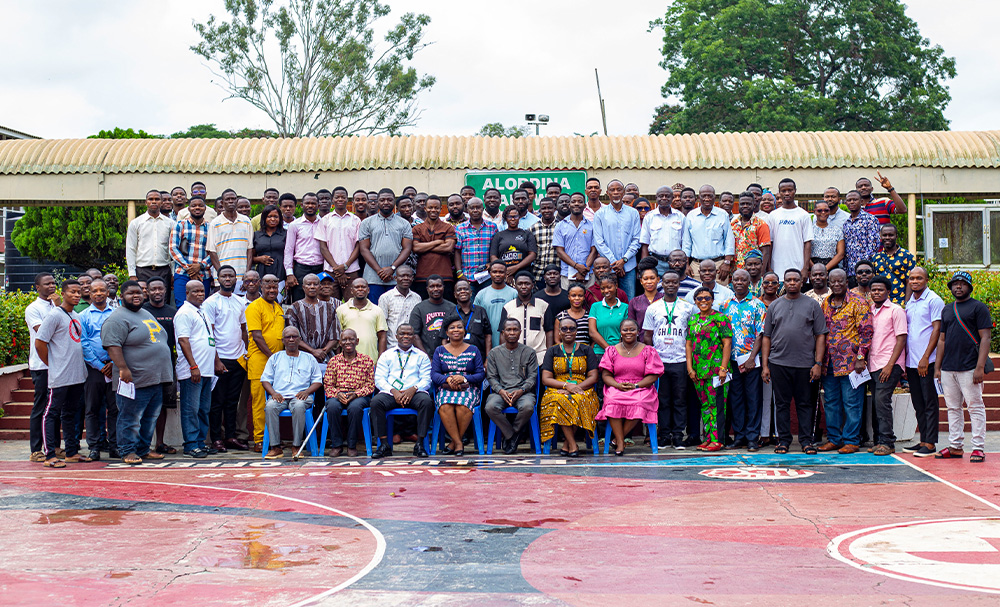
The Director of Student Affairs (DoSA), Prof. Marian Asantewah Nkansah, has urged hall and hostel assistants and managers to take a more active role in improving student welfare, highlighting their influence on student life both on and off campus.
Speaking at the second edition of the initiative aimed at strengthening residential management systems at Kwame Nkrumah University of Science and Technology, she said off-campus hostels remain an extension of the university’s responsibility.
“So long as our students are in that space, it is a part of the university,” she said, emphasising that off-campus hostels remain an extension of Kwame Nkrumah University of Science and Technology, Kumasi’s responsibility.

She described student accommodation as a concern and urged hall and hostel assistants to prioritise student wellbeing, address challenges proactively, and view their roles as vital rather than merely administrative.
“Do not consider yourself as ‘I’m just a policy’; you are very important,” she said, highlighting their influence on students’ daily experiences.
The Deputy Director of Student Affairs (Housing and Welfare), Prof. Samuel Amos-Abanyie, said the workshop was designed to strengthen the capacity of hall and hostel assistants and residential managers to improve student accommodation and welfare.
He noted that the exercise was necessary because student housing remains a critical concern, with some students previously having to seek accommodation in external hotels due to limited or inadequate residential spaces on campus.
Prof. Amos-Abanyie said hall and hostel staff must see themselves as community leaders responsible for shaping student life.
The Deputy Registrar of DoSA, Mrs. Victoria De-Graft Adjei, emphasised the need for heightened responsibility, caution and accountability in the management of student welfare and accommodation services.
She raised concerns about the complexities and risks associated with managing student residential life, particularly in relation to access, safety and wellbeing, noting that such issues require careful and responsible handling.
“It is very, very risky to find access to the people,” she said, emphasising the need for structured and secure engagement within student residential systems.
Mrs De-Graft Adjei stressed that hall and hostel assistants must approach their roles with a strong sense of duty, professionalism and awareness of the potential consequences of negligence.
Prof. Linda Aurelia Ofori of the Department of Theoretical and Applied Biology highlighted the importance of structure and responsibility in managing a large student population, noting that effective systems are necessary to maintain order on campus.
She stressed the need for proper administrative procedures, such as student check-in and check-out systems in residential facilities, describing them as essential tools for ensuring safety, accountability and efficient monitoring of student movement.
Deputy Director responsible for Conduct and Discipline, Prof. Akwasi Acheampong Aning, emphasised issues of fairness and justice, noting that some situations require clearer resolution and more equitable handling.
He highlighted challenges in communication, resource access and fairness, while pointing to the need for improvement and broader opportunities.

According to Deputy Head, Security Services, Ms. Millicent Owusu Nyarko, student halls and hostels require more structured and reliable security arrangements to ensure continuous protection of residents.
She said effective safety systems depend on clear procedures, well-defined responsibilities and efficient communication between hall management, security personnel and students.


